
Stopping Green and Black Mould Behind Wardrobes Against External Walls
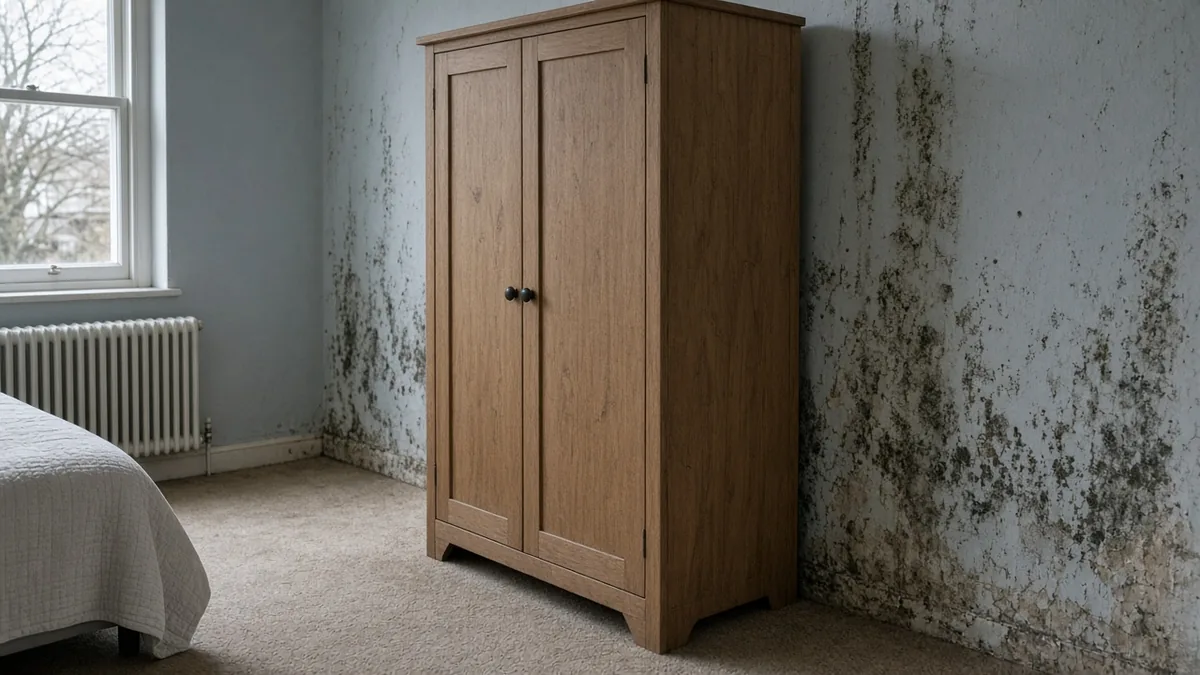
Mould behind a wardrobe is almost always condensation: the outside wall is cold, the furniture stops warm air reaching it, and moist bedroom air condenses in the still gap. Move the wardrobe to an internal wall if you can; if not, leave a gap of at least 75–100 mm (City of London and Chesterfield council advice), don't overfill it, and keep bedroom humidity in the 40–60% band with ventilation, steady heating and, if needed, a quiet dehumidifier.
You pull the wardrobe out to retrieve a dropped sock and find a grey-green bloom spreading across the wallpaper, sometimes with black spots along the skirting board and a musty smell on the coats at the back. It is one of the most common damp discoveries in British bedrooms, and it is nearly always fixable without builders. This guide explains why the space behind furniture is a mould magnet and what to do about it, in the order that makes the biggest difference.
Why Mould Grows Behind Furniture
The wall is cold, and the furniture keeps it cold
Outside walls are the coldest walls in the house, especially solid brick walls in older terraces and cottages. In an open room, warm air from the heating constantly washes over them. Push a wardrobe flat against that wall and you create a pocket of still air the heating never reaches. The wall surface behind it stays colder than the rest of the room.
Moist air finds the cold spot
All homes produce moisture from breathing, cooking, showering and drying washing. NHBC's guidance note Condensation in your home explains that condensation forms when warm air meets a colder surface and can no longer hold its water vapour, and lists "areas where air circulation is restricted, such as inside cupboards and behind furniture that's been placed against an outside wall" among the most likely places. If it keeps happening in the same spot, NHBC says, black mould can grow.
The government's damp and mould guidance makes the same point, describing condensation damp as moisture condensing on "low points on walls behind sofas or wardrobes" and calling it the most common form of damp (GOV.UK). It also notes that a mouldy smell with no visible mould may mean growth hidden behind furniture or wallpaper.
Bedrooms make it worse
Bedrooms are often kept cooler than living rooms, are shut for eight hours a night with two people breathing in them, and are where many people dry the last of the washing. That combination of cool surfaces and overnight moisture is why the wardrobe wall, the bed headboard and the corner behind a chest of drawers are classic trouble spots.
Step 1: Check It Really Is Condensation
Before treating it as a furniture problem, rule out water getting in from outside. Condensation mould is usually low on the wall, in corners and in still-air pockets, and gets worse in cold weather. Penetrating damp tends to follow rain, may appear higher up, and often comes with a defect outside such as a blocked gutter or cracked render. Our solid-wall Victorian terrace guide walks through the differences. If you suspect a leak or defect and you rent, report it to your landlord.
Step 2: Move the Furniture or Leave a Real Gap
Internal walls first
NHBC's advice is to put free-standing wardrobes and other furniture against internal walls rather than external ones where possible. Gedling Borough Council gives the same advice, defining internal walls as those with a room on both sides.
If it has to stay on the outside wall, leave a gap
Councils and housing associations give remarkably consistent figures:
| Source | Recommended gap behind furniture on external walls |
|---|---|
| City of London Corporation | At least 3–4 inches (75–100 mm) |
| Chesterfield Borough Council | Ideally 100 mm |
| Platform Housing Group leaflet | At least 10 cm, though any gap is better than none |
Swipe to see more columns
Hartlepool Borough Council's damp booklet adds beds to the list: don't put furniture, including beds, against external walls, and leave a gap to allow airflow.
A practical tip: fix two short battens or furniture stops to the back of the wardrobe at the top and bottom so it cannot be pushed back flat against the wall during cleaning. Gedling also suggests putting floor-standing furniture on blocks so air can get underneath.
Step 3: Let the Wardrobe Itself Breathe
The inside of a packed wardrobe is its own small, cold, unventilated room.
- Don't overfill it. NHBC, Chesterfield and the City of London all advise against cramming cupboards and wardrobes, because air can't circulate around the contents.
- Add ventilation. Gedling Borough Council suggests cutting ventilation slots in the back of shelves or using slatted shelves, and cutting "breather" holes in doors and in the back of wardrobes. If you rent, ask before modifying fitted furniture.
- Keep damp items out. Only put clothes away fully dry. A wardrobe is not the place to finish off a half-dry shirt.
- Check regularly. Chesterfield recommends checking for mould under divan drawers and behind wardrobes, bedside cabinets and headboards, and in clothing stored in cupboards.
Moisture absorber bags, such as the ANSIO hanging wardrobe bags (pack of 12, £9.95 at the time of checking), can take the edge off a musty wardrobe. They are a supplement, not a fix: they do nothing for the cold wall behind.
Step 4: Lower the Room's Humidity
Airflow treats the symptom location; reducing the moisture in the room treats the cause.
Heat steadily, ventilate briefly
The Energy Saving Trust warns that rooms where the heating is off or low in colder months are prone to damp, and recommends keeping trickle vents open and opening windows for at least five minutes several times a day (Energy Saving Trust). Hartlepool's booklet suggests keeping all rooms above 15°C to reduce condensation on external walls. In a bedroom, opening the window wide for a few minutes on waking clears the night's moisture.
Measure it
Put a digital hygrometer such as the Govee H5075 (£9.48 at the time of checking) on a shelf in the bedroom. Readings that sit above 60% most mornings mean condensation is likely on the coldest surfaces; our ideal indoor humidity guide explains the 40–60% target band.
Add a quiet dehumidifier if readings stay high
In a bedroom, noise matters more than raw capacity. From our in-stock dataset:
| Model | Extraction | Noise | Power | Cost per hour* | Price |
|---|---|---|---|---|---|
| MeacoDry Arete One 6L | 6 L/day | 32 dB | 101 W | 2.66p | £129.99 |
| MeacoDry Arete One 12L | 12 L/day | 35 dB | 151 W | 3.97p | £179.99 |
Swipe to see more columns
*At the Ofgem cap of 26.32p/kWh for 1 October to 31 December 2026 (Ofgem), at full stated wattage. Price accurate as of 29/11/2026 06:23 GMT.
The 6L suits a single bedroom; the 12L is the better pick if the whole floor is damp. See the best quiet dehumidifiers for bedrooms and our sizing guide for more.
Step 5: Clean the Mould, Then Watch for It Returning
Once the furniture has been moved and the room is drier, clean the existing growth. Don't brush or vacuum it dry: Chesterfield warns that this can release spores. Our safe black mould cleaning guide covers protective kit and method. Mould on clothes and soft furnishings can be pre-treated and washed hot, or professionally cleaned, according to the City of London's advice.
Re-check behind the furniture after a few weeks of cold weather. If mould returns despite a proper gap and a drier room, the wall may be unusually cold (missing insulation or a cold bridge) or there may be water getting in, and it needs a closer look. In a rented home that is your landlord's job; our Awaab's Law guide explains timeframes in social housing.
Who Should Take This Seriously
Mould behind furniture is easy to ignore because it is out of sight, but the health risk does not depend on whether you can see it. The government's guidance says damp and mould primarily affect the airways and lungs, and that people with health conditions, children and older adults are at greater risk. NHS inform lists babies, children, older people and people with asthma or weakened immune systems among those most sensitive. If a child's bedroom is affected, deal with it promptly.
The Bottom Line
Mould behind a wardrobe is a cold wall plus still air plus moist air. Remove any one of the three and it struggles: move the furniture to an internal wall or leave a 75–100 mm gap, stop overfilling the wardrobe and give it some ventilation, and keep the bedroom's humidity in check with steady heating, short bursts of fresh air and, where needed, a quiet dehumidifier.
Recommended In-Stock Models & Running Costs
Only models currently in stock on Amazon UK are shown below. Adjust the electricity rate to match your tariff.
| Model | Category | Power | Cost / hr | 8h Cycle | Amazon UK Price | Action |
|---|---|---|---|---|---|---|
| Compressors | 101 W | 2.66p/hr | £0.21 |
£129.99
Price accurate as of 29/11/2026 06:23 GMT
|
Check price on Amazon | |

Meaco MeacoDry Arete One 12L Dehumidifier / Air Purifier
12L/day
·
35 dB
|
Compressors | 151 W | 3.97p/hr | £0.32 |
£179.99
Price accurate as of 29/11/2026 06:23 GMT
|
Check price on Amazon |
| Hygrometers | — | — | — |
£9.48
Price accurate as of 29/11/2026 06:23 GMT
|
Check price on Amazon | |
| Absorbers | — | — | — |
£9.95
Price accurate as of 29/11/2026 06:23 GMT
|
Check price on Amazon |


Product prices and availability are accurate as of the date/time indicated and are subject to change. Any price and availability information displayed on Amazon.co.uk at the time of purchase will apply to the purchase of this product.
Frequently Asked Questions
How far should a wardrobe be from an outside wall to stop mould?
The City of London Corporation advises a gap of at least 75 to 100 mm (3 to 4 inches) between furniture and external walls, and Chesterfield Borough Council says ideally 100 mm. Platform Housing Group's leaflet suggests at least 10 cm but notes that any gap is better than none. Better still, put the wardrobe against an internal wall.
Why is there mould on the clothes inside my wardrobe?
The back of a wardrobe standing against a cold outside wall can be cold enough for moisture to condense on it, and an overfilled wardrobe has no air movement to dry it out. NHBC and several councils advise not overfilling wardrobes and cupboards, and Gedling Borough Council suggests ventilation slots in shelves and breather holes in doors and backs.
Will moisture absorber bags in the wardrobe fix the problem?
They can help with a musty-smelling wardrobe, but they deal with a small volume of air and do nothing for the cold wall behind it. The fixes that address the cause are moving the furniture or leaving a gap, keeping the room evenly heated, ventilating, and lowering the room's humidity.
Should I clean the mould myself?
Small patches can usually be cleaned by the occupant with care and protective kit; follow our safe black mould cleaning guide. If the mould covers a large area, keeps returning after you have fixed the airflow, or you rent your home, report it: in rented homes landlords are responsible for addressing damp and mould.
More UK Damp & Running-Cost Guides
Why Drying Wet Clothes on Radiators Causes Black Mould and Costs More to Heat
Every drop of water in a wash load ends up in your room's air, and draping it on a radiator simply speeds that up while blocking the heat the radiator is meant to circulate. NHBC estimates indoor drying can add 160 to 550 litres of moisture a year to a household, which settles as condensation on cold walls and windows and feeds black mould. Dry on an airer in one closed, ventilated room, ideally with a dehumidifier running (about 4p an hour for a 151 W model at the current Ofgem cap).
Protecting Power Tools, Bikes and Classic Cars From Rust in a UK Garage
Rust in a garage comes from condensation on metal that is colder than the surrounding air, so the fix is drier air, not more ventilation. Meaco advises a well-sealed garage with a dehumidifier set to about 50% RH; in an unheated UK garage that usually means a desiccant model, which works down to 1°C. An EcoAir DD1 Simple costs about 7.90p an hour on its low setting at the current Ofgem cap, and should be set up with continuous drainage and its humidistat so it can run unattended.
Should You Leave Window Trickle Vents Open All Winter in the UK?
Yes. GOV.UK's ventilation guide and the Energy Saving Trust both say to keep trickle vents open and unblocked all year, including winter: you use a little more heating energy, but you get a constant, controlled supply of fresh air that carries moisture out before it condenses. Close them only briefly, for example when outdoor pollution or smoke is high, and reopen them afterwards.