Disclosure: As an Amazon Associate I earn from qualifying purchases (#ad). How we fund this site

UK Damp, Condensation & Energy Guides

Evidence-based guides on British housing condensation, Ofgem electricity running costs, Awaab's Law tenant rights, and indoor laundry drying.

15 published guides Page 1 of 2 Subscribe via RSS
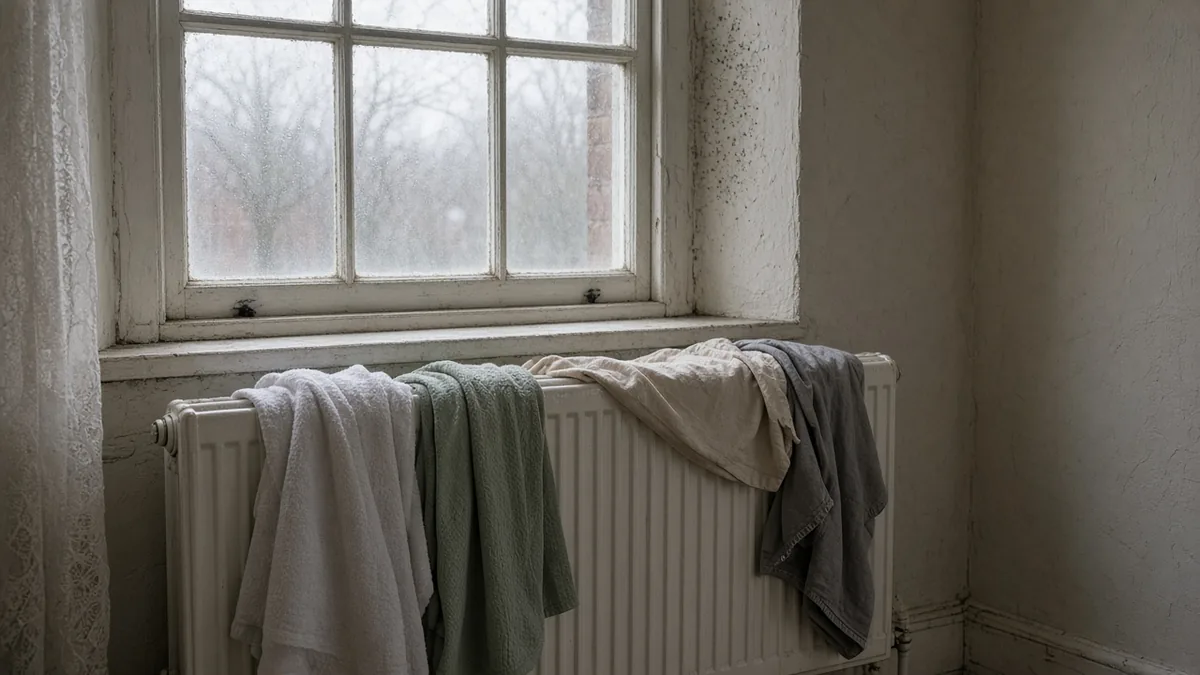
Damp towels draped over a white radiator beneath a condensation-misted sash window, with mould spots on the wall beside it
Compressor Dehumidifiers 29 November 2026

Why Drying Wet Clothes on Radiators Causes Black Mould and Costs More to Heat

Every drop of water in a wash load ends up in your room's air, and draping it on a radiator simply speeds that up while blocking the heat the radiator is meant to circulate. NHBC estimates indoor drying can add 160 to 550 litres of moisture a year to a household, which settles as condensation on cold walls and windows and feeds black mould. Dry on an airer in one closed, ventilated room, ideally with a dehumidifier running (about 4p an hour for a 151 W model at the current Ofgem cap).
Read guide
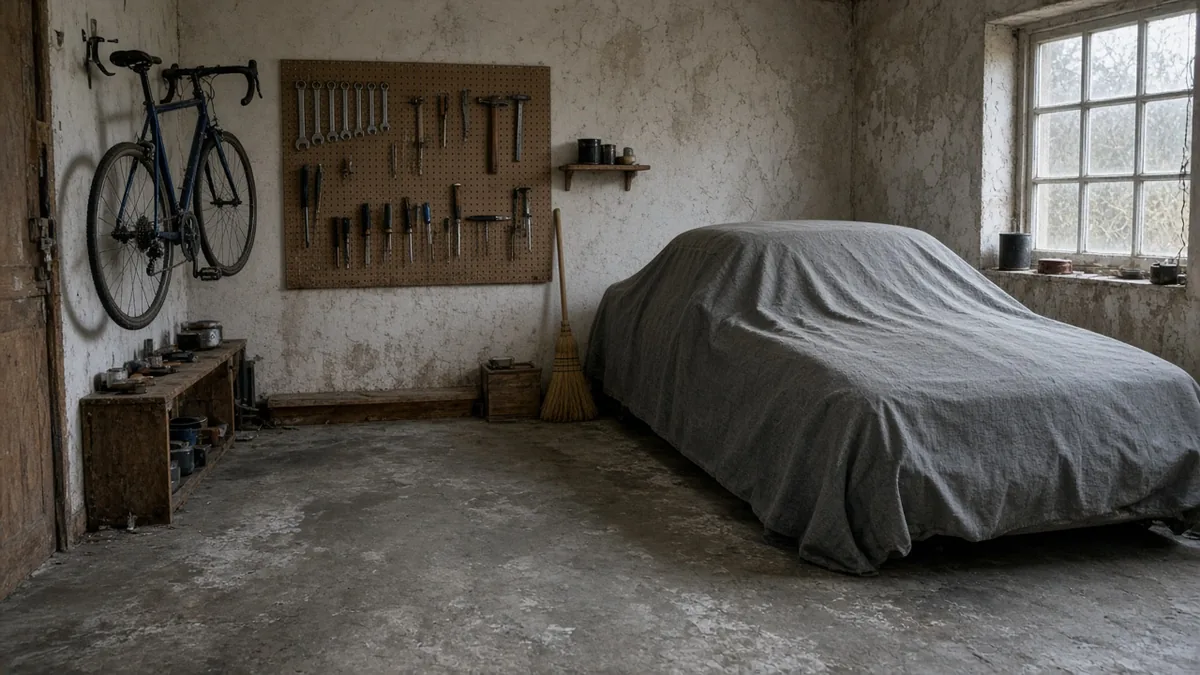
Damp unheated garage with hand tools on a pegboard, a wall-hung bicycle and a covered car
Desiccant Dehumidifiers 29 November 2026

Protecting Power Tools, Bikes and Classic Cars From Rust in a UK Garage

Rust in a garage comes from condensation on metal that is colder than the surrounding air, so the fix is drier air, not more ventilation. Meaco advises a well-sealed garage with a dehumidifier set to about 50% RH; in an unheated UK garage that usually means a desiccant model, which works down to 1°C. An EcoAir DD1 Simple costs about 7.90p an hour on its low setting at the current Ofgem cap, and should be set up with continuous drainage and its humidistat so it can run unattended.

Read guide
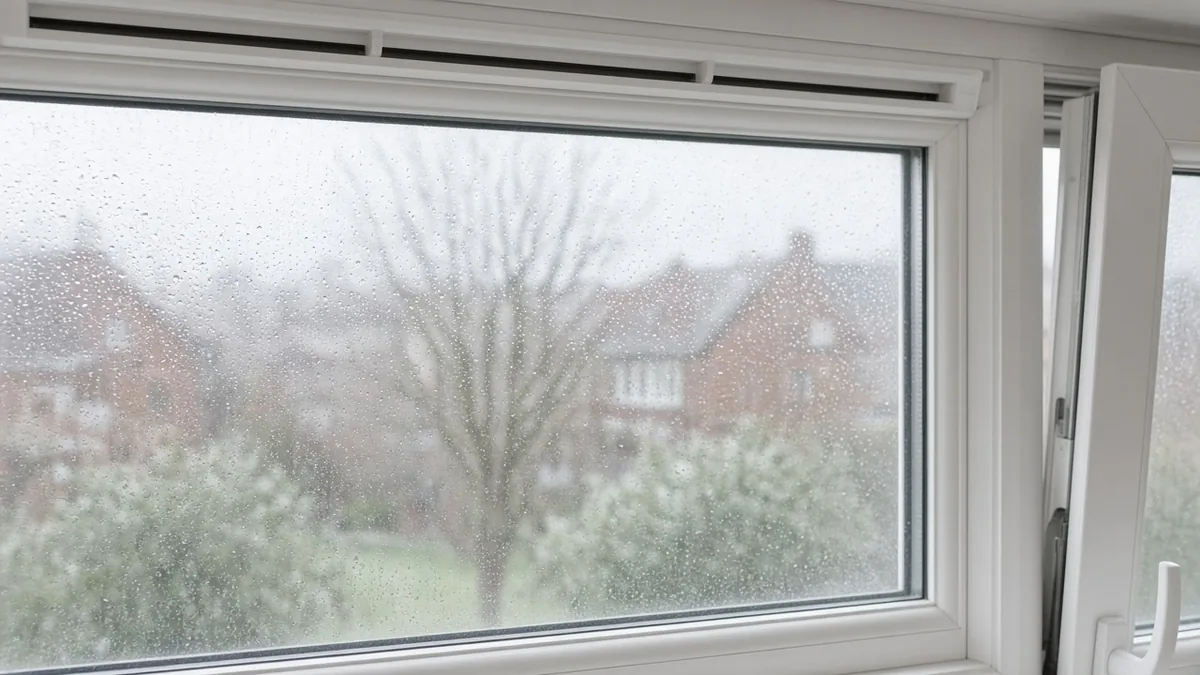
Trickle vent along the top of a white uPVC window frame, with rain on the glass and brick houses outside
Digital Hygrometers 29 November 2026

Should You Leave Window Trickle Vents Open All Winter in the UK?

Yes. GOV.UK's ventilation guide and the Energy Saving Trust both say to keep trickle vents open and unblocked all year, including winter: you use a little more heating energy, but you get a constant, controlled supply of fresh air that carries moisture out before it condenses. Close them only briefly, for example when outdoor pollution or smoke is high, and reopen them afterwards.

Read guide
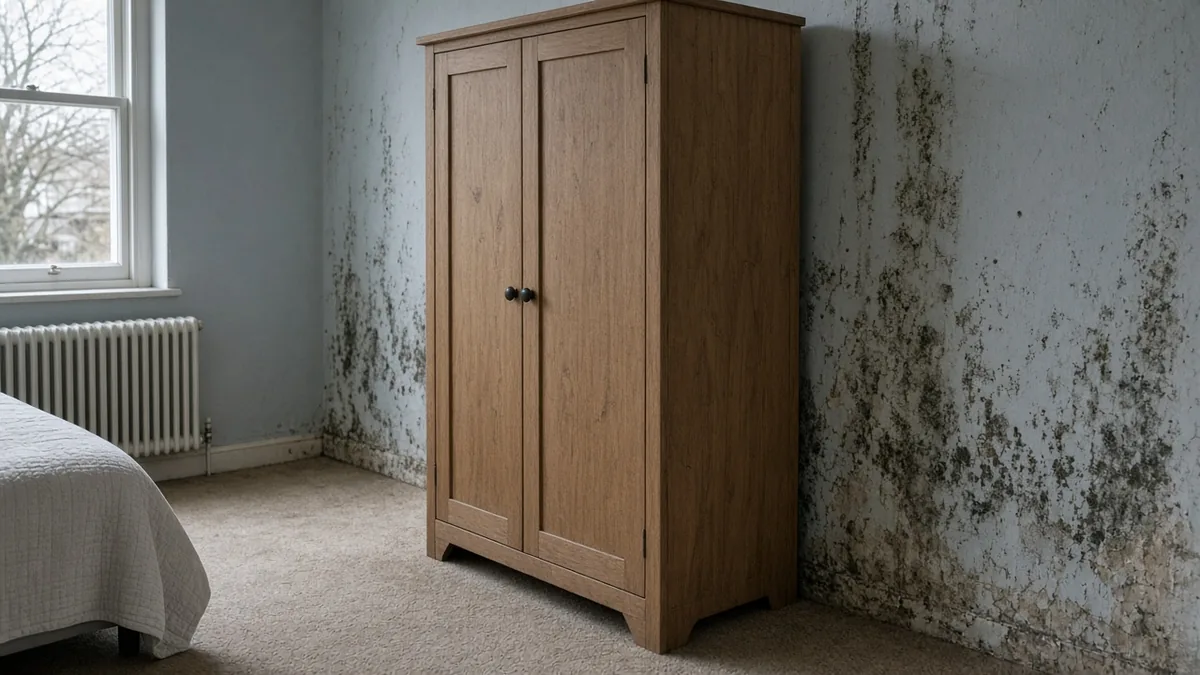
Wooden wardrobe standing against a bedroom outside wall covered in spreading black mould
Compressor Dehumidifiers 29 November 2026

Stopping Green and Black Mould Behind Wardrobes Against External Walls

Mould behind a wardrobe is almost always condensation: the outside wall is cold, the furniture stops warm air reaching it, and moist bedroom air condenses in the still gap. Move the wardrobe to an internal wall if you can; if not, leave a gap of at least 75–100 mm (City of London and Chesterfield council advice), don't overfill it, and keep bedroom humidity in the 40–60% band with ventilation, steady heating and, if needed, a quiet dehumidifier.

Read guide
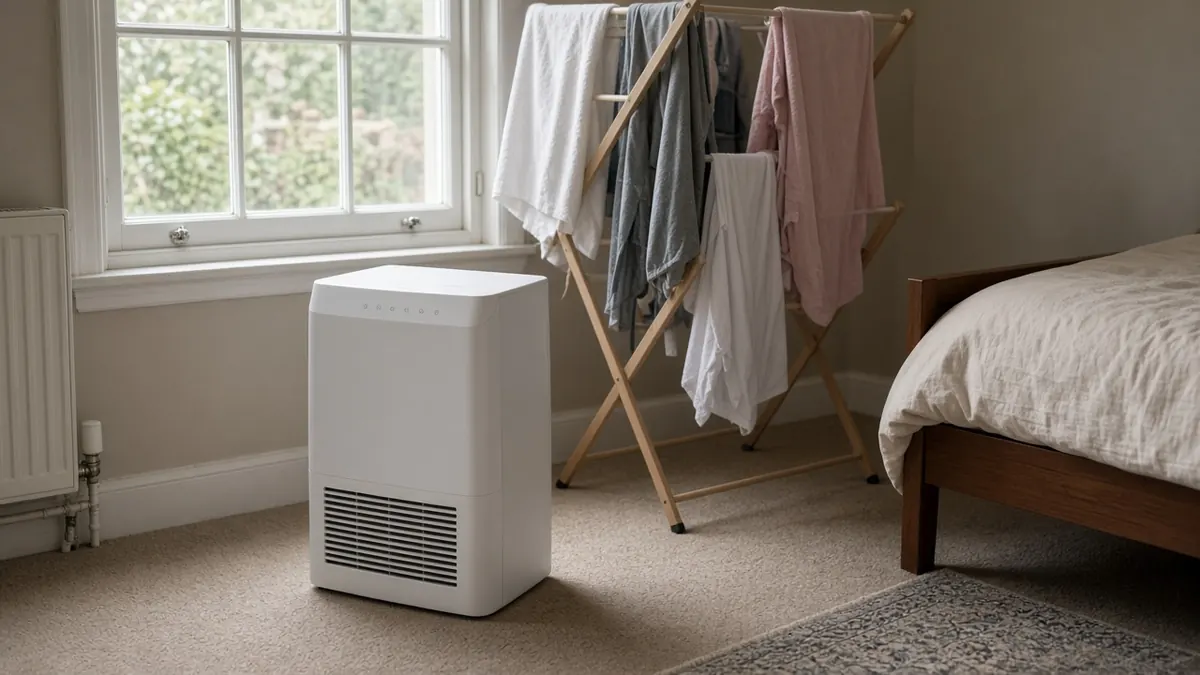
A white compact dehumidifier in a British bedroom beside a wooden airer of drying laundry
Compressor Dehumidifiers 28 November 2026

What Size Dehumidifier Do I Need? (6L vs 10L vs 12L vs 20L vs 25L UK Guide)

Size by bedrooms and dampness: Meaco's current guidance puts a 6L at one bedroom, a 10L at up to two, a 12L at up to three, a 20L at up to four and a 25L at up to five. Size up if you dry laundry indoors, have morning condensation or mould, or live in an older solid-wall home. Remember the litre figure is measured at 30°C and 80% RH, and Meaco's graph puts its 20L model at around 8 litres a day in average conditions.

Read guide
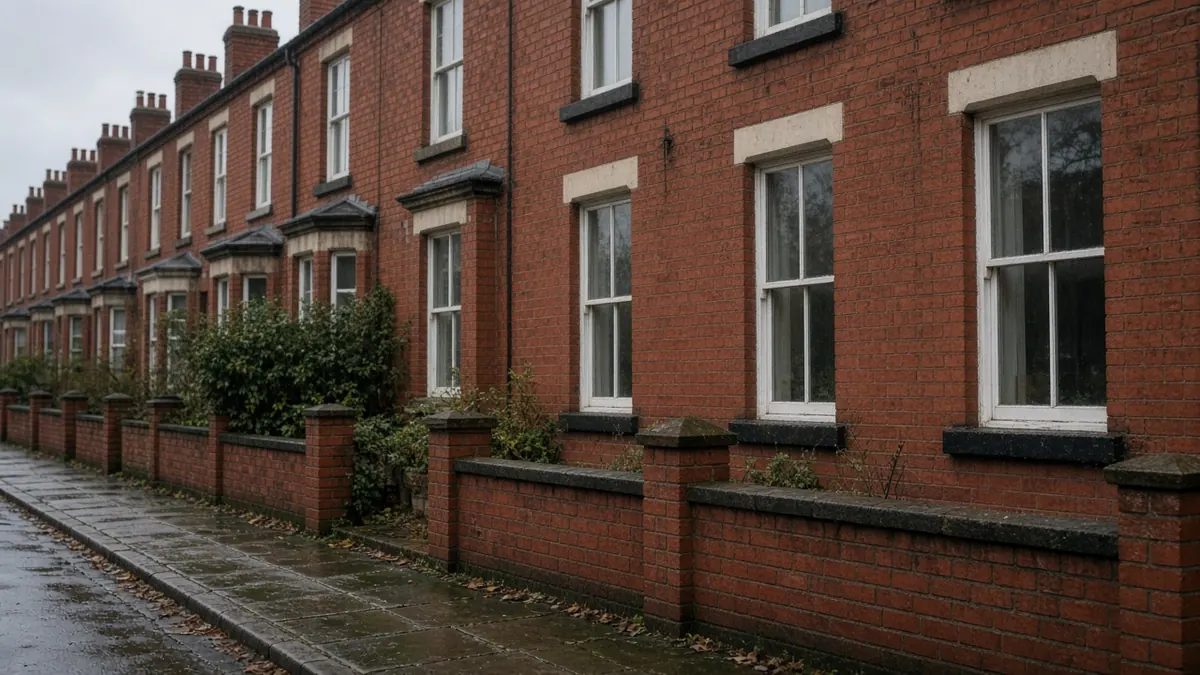
A row of red-brick Victorian terraced houses with sash windows on a wet, overcast British street
Compressor Dehumidifiers 28 November 2026

Solid-Wall Victorian Terraces: Condensation vs Penetrating Damp Explained

In a solid-wall Victorian terrace, most damp is either condensation (moisture from cooking, washing and breathing settling on cold walls) or penetrating damp (rain getting in through gutters, downpipes or failed pointing). Historic England notes that rising damp is uncommon: a BRE analysis of 1,500 damp investigations found it in only 4% of cases. A dehumidifier helps with condensation and with drying out after repairs, but it cannot fix water coming in from outside.

Read guide
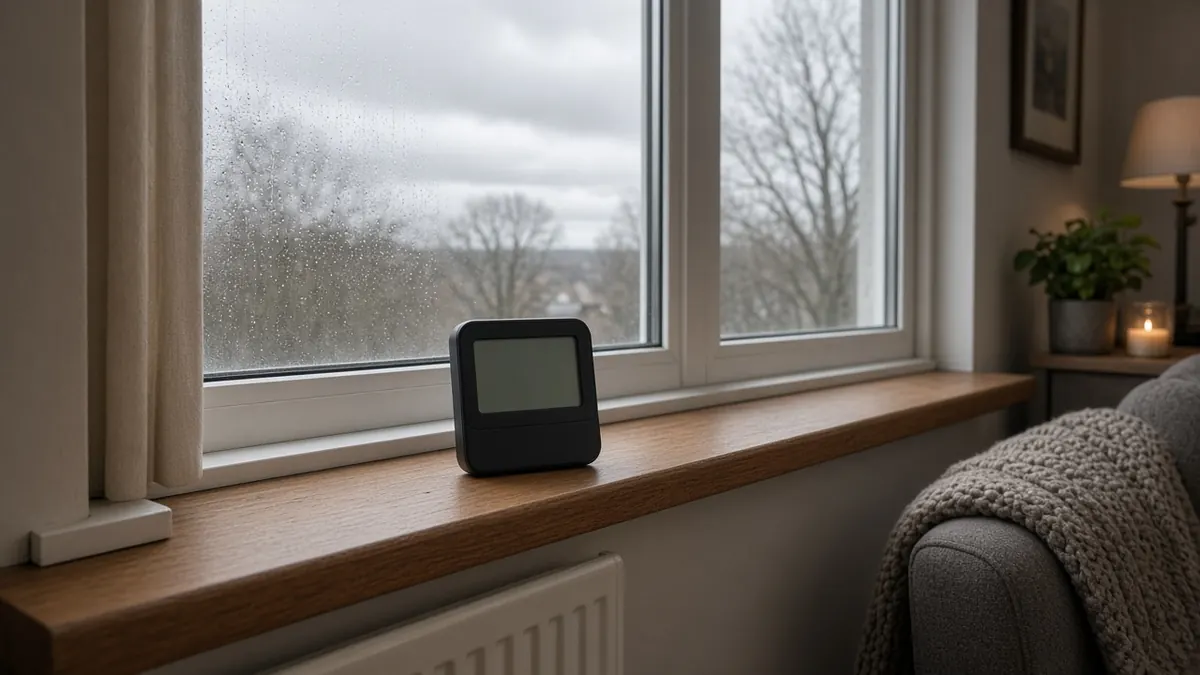
A small digital hygrometer on a wooden windowsill beside a rain-speckled window in a cosy British living room
Digital Hygrometers 28 November 2026

What Is the Ideal Indoor Humidity in a UK Home? (40-60% RH Guide)

Aim to keep a UK home between 40% and 60% relative humidity, with around 50–55% as the everyday target Meaco recommends for British homes. If windows still stream on cold winter mornings, Meaco suggests lowering a dehumidifier's target towards 40% RH; readings that stay above 60% are where mould and dust mites thrive.

Read guide
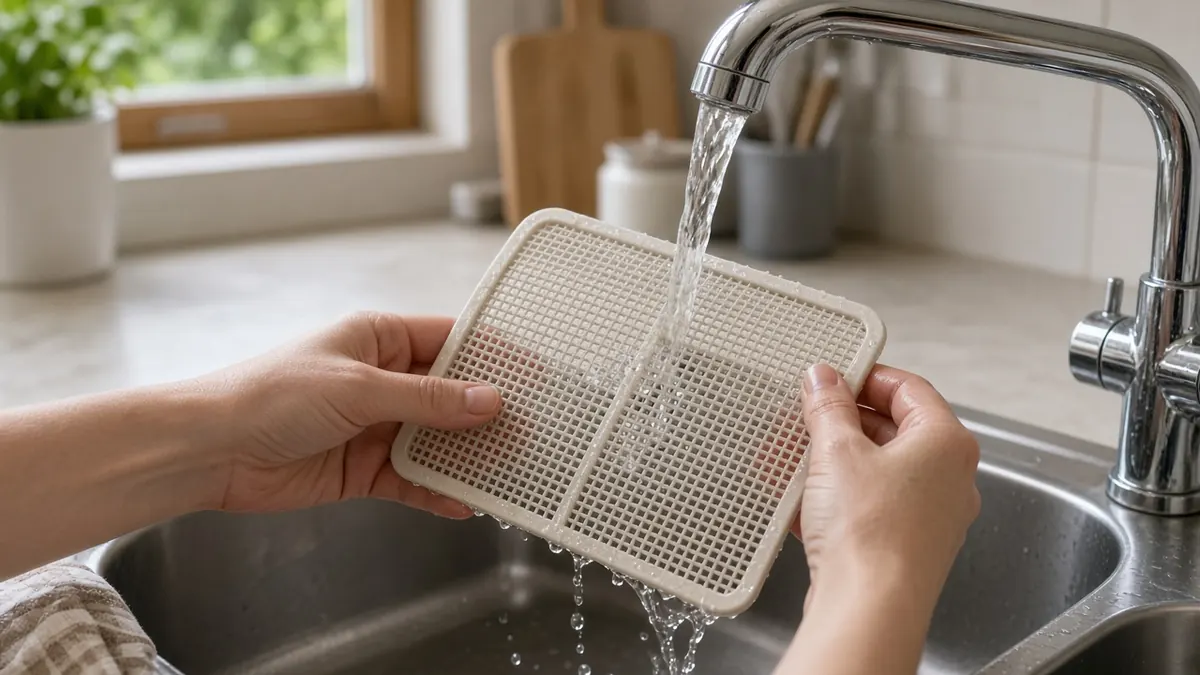
Hands rinsing a plastic mesh filter under a kitchen tap in a British home
Compressor Dehumidifiers 28 November 2026

How Often Should You Clean a Dehumidifier Filter (And What Happens If You Don't)?

Clean a dehumidifier's dust filter at least every two weeks: Meaco, Pro Breeze and EcoAir all give the same fortnightly interval, and Meaco says skipping it could invalidate the warranty. A clogged filter strains the fan motor, cuts the amount of water collected, raises energy use and can make the unit noisy or stop it collecting at all. HEPA and carbon filters are different and need replacing, not washing.

Read guide
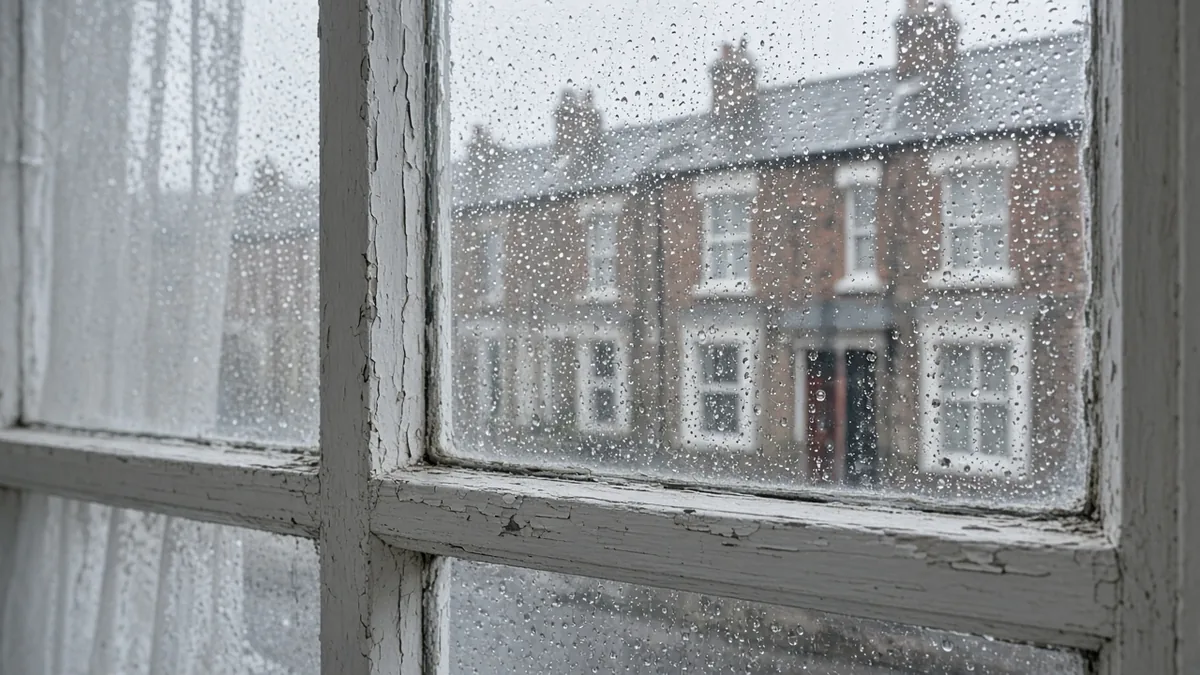
Condensation droplets on the inside of a peeling white timber sash window looking onto a brick terrace
Digital Hygrometers 26 November 2026

Why Condensation Forms on the Inside of UK Windows (Dew Point Explained)

Condensation forms on the inside of a window when the glass is colder than the dew point of the room air, so water vapour turns back into droplets on it. At 20°C and 60% relative humidity the dew point is roughly 12°C, so any pane or frame colder than about 12°C will mist up. Bringing the dew point down (less moisture, more ventilation, a dehumidifier) or warming the glass is the only way to stop it.

Read guide
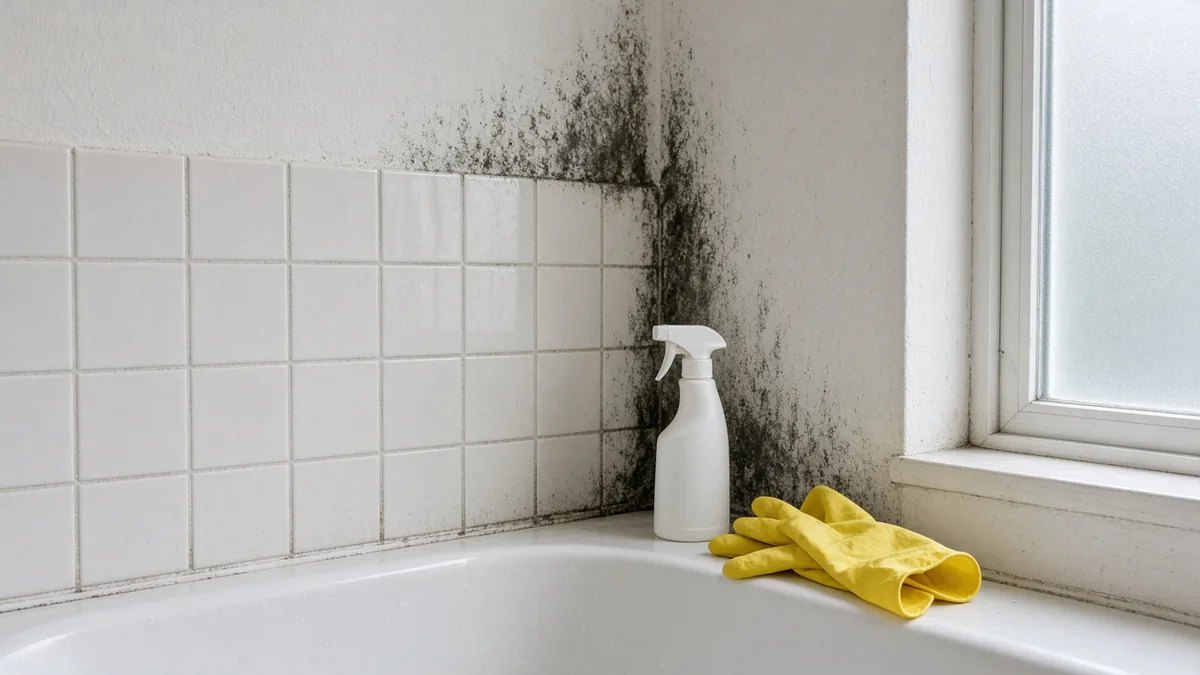
Black mould in a bathroom wall corner beside yellow rubber gloves and an unlabelled spray bottle
Anti-Mould Treatments & Sprays 26 November 2026

How to Clean Black Mould Safely Without Spreading Spores Around Your Home

Wear gloves, goggles and a mask over your nose and mouth, open the window but close the door to the rest of the house, then wipe the mould while it is wet using a mould and mildew product (GOV.UK advises these in preference to bleach) and a disposable cloth. Never brush, dry-wipe or vacuum mould. Bag the cloth and mask afterwards, and leave patches larger than about 1 m², or mould caused by leaks, to a professional or your landlord.

Read guide
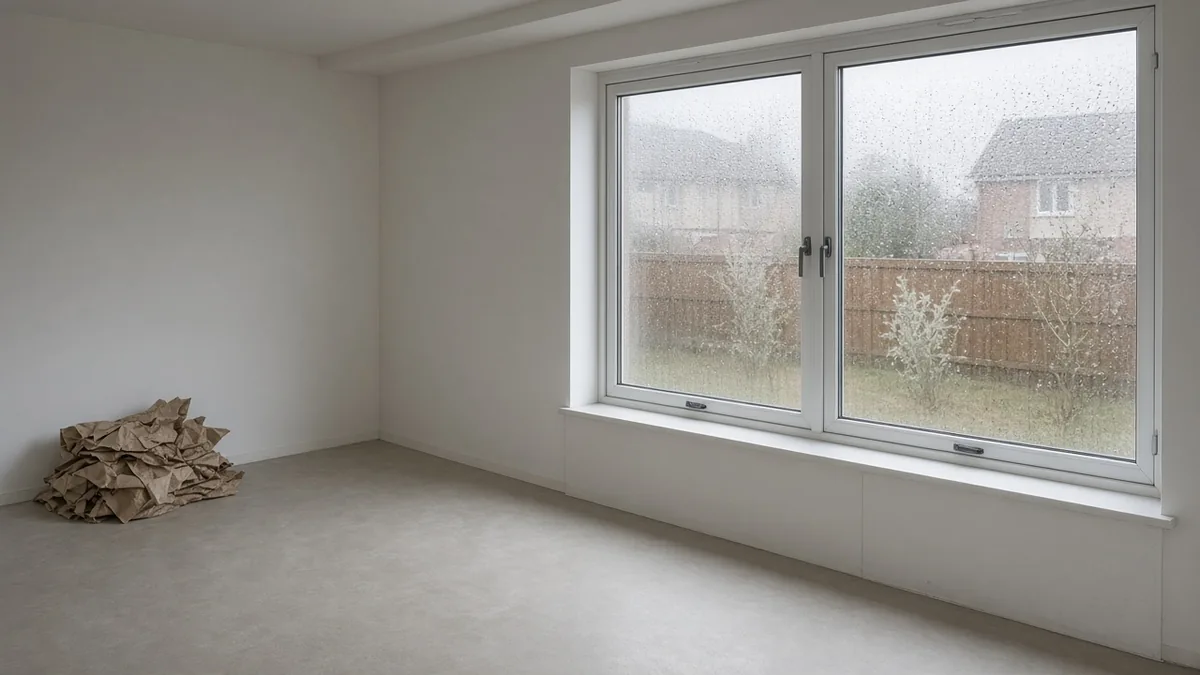
An empty newly built British room with condensation on a large modern window and packing paper in the corner
Compressor Dehumidifiers 26 November 2026

New-Build Homes in the UK: Drying Out Construction Moisture in Year One

NHBC says up to 8,000 litres of water can go into building a new home, and that a new home should reach a moisture-balanced state within 18 months to 2 years. Because modern homes are insulated and draught-proofed, that moisture and everyday steam escape slowly, so keep trickle vents open, run extractors, heat evenly rather than hot, avoid drying clothes on radiators, and use a dehumidifier if condensation persists. Ongoing damp or mould is not normal and should be reported to your builder.

Read guide
A warm British living room opening onto a cooler glass conservatory
Desiccant Dehumidifiers 26 November 2026

Compressor vs Desiccant Dehumidifier: Which Works Best in British Homes?

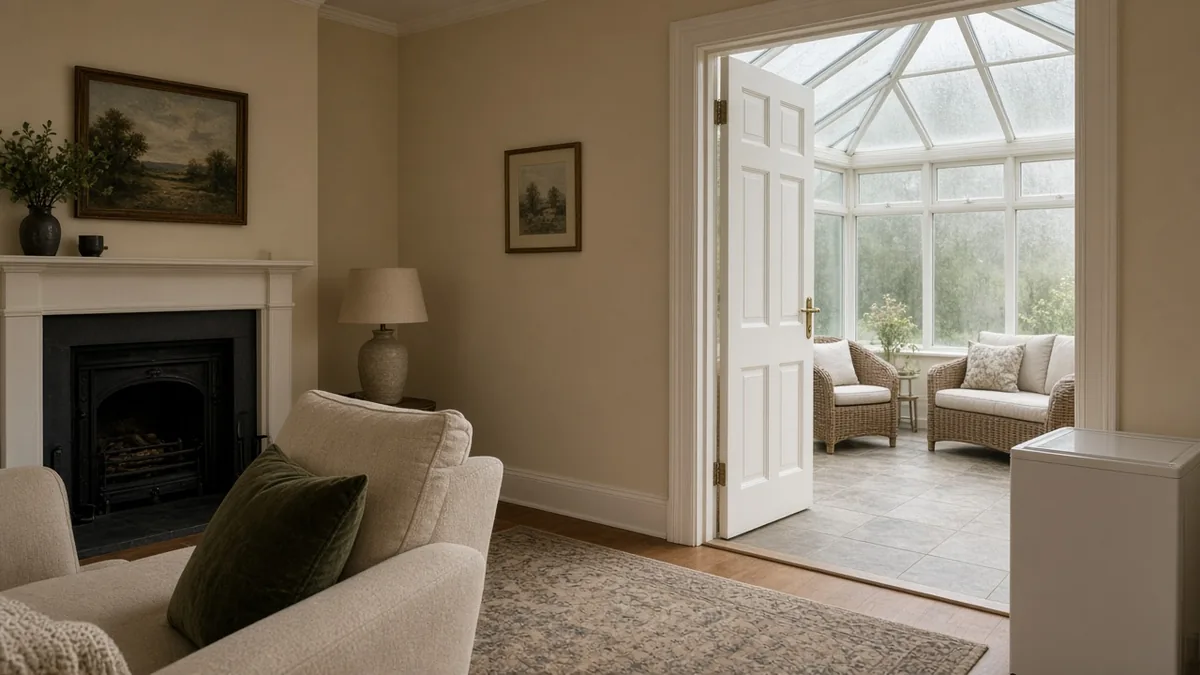
Choose by room temperature: Meaco's rule of thumb is a desiccant below 10°C, a desiccant or large 20L–25L compressor between 10°C and 15°C, and any type above 15°C. Compressors are generally cheaper to run in heated homes (the in-stock 12L models in our dataset draw 151–200 W), while desiccants keep working in cold garages and conservatories (our desiccant models are rated from 1°C) and blow out noticeably warmer air.

Read guide