
Protecting Power Tools, Bikes and Classic Cars From Rust in a UK Garage
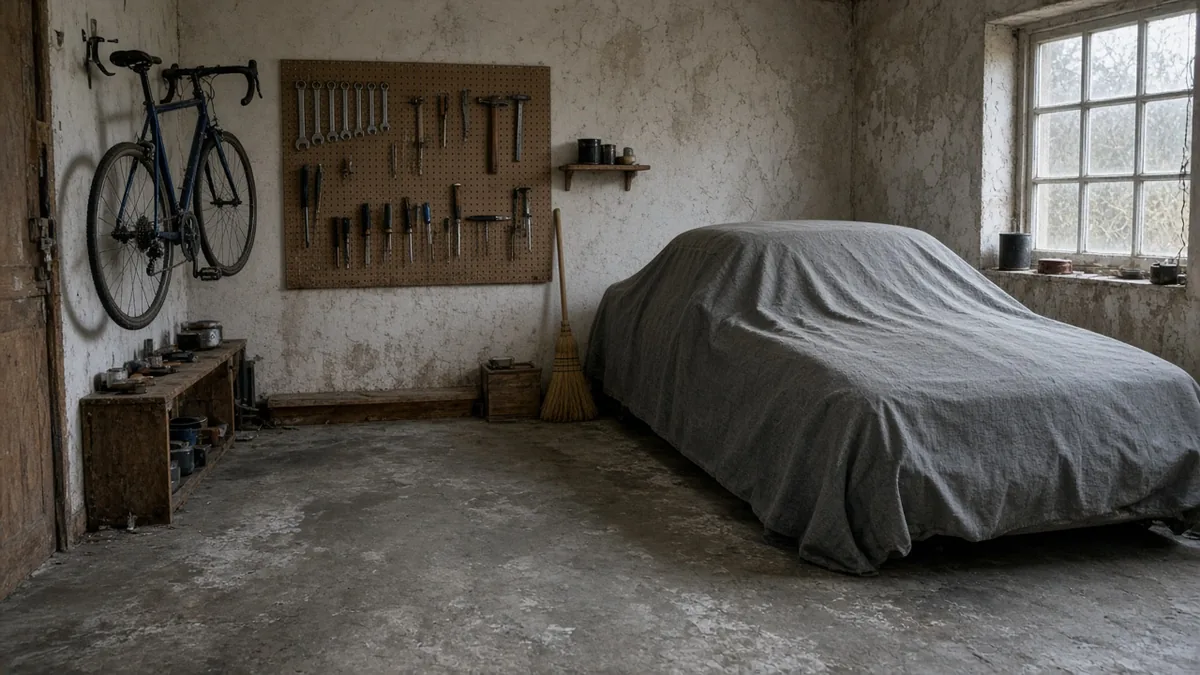
Rust in a garage comes from condensation on metal that is colder than the surrounding air, so the fix is drier air, not more ventilation. Meaco advises a well-sealed garage with a dehumidifier set to about 50% RH; in an unheated UK garage that usually means a desiccant model, which works down to 1°C. An EcoAir DD1 Simple costs about 7.90p an hour on its low setting at the current Ofgem cap, and should be set up with continuous drainage and its humidistat so it can run unattended.
A British garage in winter is a near-perfect rust incubator: unheated, often damp, rarely visited, and full of steel. Owners typically find out in spring, when the chisels have a brown bloom, the bike chain is stiff and the cardboard boxes have gone soft. This guide explains why it happens, what not to do, and how to set up a dehumidifier that can be left to look after the space on its own.
Why Things Rust in a Garage
Metal is colder than the air around it
Meaco's garage dehumidifier guide puts the mechanism simply: the surface of metal tools is cooler than the surrounding air, so condensation is more likely to form on them, and when water sits on iron or steel it reacts with oxygen to form rust. A spanner on a pegboard is effectively a small cold window.
Garages swing in temperature
An unheated garage follows the weather. After a cold night, a milder, damper day brings in moist air that condenses on anything still cold, including tools, bike frames, the car's metalwork and the underside of a steel workbench.
It's not only metal
Meaco lists the other casualties: paper-based items absorb moisture, swell and go mouldy; leather, wood veneer and cloth on classic cars and bikes can peel and grow mould; and tents, cycling kit, photos, records and furniture are all at risk. EcoAir's manuals note that high humidity causes swelling, corrosion, and softening of glues and paint (EcoAir DD1 Simple manual).
Why Opening the Door Doesn't Fix It
In a house, ventilation is the first line of defence against damp. A garage is different. Meaco argues that increased ventilation "is not really a solution for a garage": you can't leave windows or doors open without a security risk, you won't run out every time it rains to close them, and "you have no way of knowing if the air coming into the garage is damper or drier than the air that is already in the garage".
Its recommendation is the opposite of the advice for homes: seal the garage so that you have as few air changes with outside as possible, and let a dehumidifier dry the air that is already inside. Draught-proof the door edges, fill obvious gaps, and keep the internal door to the house closed so you're not drying the whole home.
What Humidity to Aim For
Meaco's Chris Michael, replying to garage owners on the same guide, recommends setting the dehumidifier to 50% RH, regardless of the type of dehumidifier, and describes 50% as "a good figure for a garage". Meaco also stresses using a dehumidifier with a humidistat so you don't over-dry the air, which can crack leather and veneer on a classic car.
That fits the controls on common desiccant models. The EcoAir DD1 Simple manual describes three humidity settings:
| Setting | Dries the air to approximately |
|---|---|
| Low | 70% RH |
| Medium | 50% RH |
| High | 40% RH |
Swipe to see more columns
For a garage of tools, bikes and a car, Medium is the logical starting point. Low is too damp for rust protection, and High risks over-drying leather and wood. Check the result with a separate hygrometer placed near the things you care about, not just the dehumidifier's own reading.
Desiccant, Not Compressor (in Most Garages)
Compressor dehumidifiers condense water on a chilled coil, and they struggle when the room itself is cold. Meaco explains that desiccant dehumidifiers offer better extraction below 10°C, listing garages and workshops among their best uses, and that the air they blow out is about 10–12°C warmer, a small bonus in a cold space. The compressor models in our dataset list a 5°C minimum operating temperature, while the EcoAir desiccant models below operate from 1°C.
If your garage is insulated, attached to the house and rarely drops below about 10°C, a compressor model can still make sense. Our compressor vs desiccant guide explains the trade-off.
Setting Up for Unattended Running
A garage dehumidifier has to cope without you for days or weeks at a time.
Continuous drainage
A 2-litre tank fills quickly in a damp garage, and when it's full the machine stops. Meaco says continuous drainage via a hose is sensible "so that the dehumidifier does not turn off when the bucket is full". The EcoAir DD1 Simple manual specifies a hose with a 12 mm inner diameter, run downhill to a drain with no sharp bends. One winter-specific warning from EcoAir: never leave the end of the hose outside when the temperature is below 1°C, as frozen water can block it and push water back into the unit.
Auto-restart after a power cut
Meaco looks for Auto Restart on garage units so the machine comes back on after a power cut. EcoAir says the DD1 Simple MK3 restores its previous settings when power returns.
Power and placement
Meaco advises siting the dehumidifier near a socket so you don't need an extension lead, and the EcoAir DD1 Simple manual says not to use extension cables or multi-sockets. The same manual asks for at least 40 cm clearance around the unit. Make sure air can circulate between the dehumidifier and the items you are protecting; Meaco notes both need good air circulation.
Models and Running Costs
From our dataset, in stock on Amazon UK:
| Model | Extraction (20°C, 60% RH) | Operating range | Tank | Price |
|---|---|---|---|---|
| EcoAir DD1 Simple MK3 | 7.5 L/day | 1–35°C | 2 L | £199.98 |
| EcoAir DD1 Classic MK6 | 7.5 L/day | from 1°C | 2 L | £199.99 |
| EcoAir DD3 Slimline | 10 L/day | from 1°C | 3 L | £233.99 |
Swipe to see more columns
Price accurate as of 29/11/2026 06:23 GMT. Extraction figures are the manufacturer's ratings at 20°C and 60% RH; expect less in a cold garage.
Running costs. EcoAir publishes a power range rather than a single figure for its desiccant models, so we only calculate the one we have verified. EcoAir lists the DD1 Simple MK3 at 300 W on low and 580 W on high. At the Ofgem cap of 26.32p/kWh for 1 October to 31 December 2026 (Ofgem):
| DD1 Simple MK3 mode | Power | Cost per hour | Cost per 8 hours |
|---|---|---|---|
| Low | 300 W | 7.90p | £0.63 |
| High | 580 W | 15.27p | £1.22 |
Swipe to see more columns
Those are worst-case figures for continuous running. With the humidistat set to around 50% in a well-sealed garage, the unit stops once the target is reached and restarts when humidity rises, so the real bill depends on how airtight the garage is and the weather. Desiccant models do draw more power than compressors, which is the price of working in the cold; our running cost guide compares the two.
Monitor It From the House
You won't be in the garage every day, which makes remote monitoring useful. A Wi-Fi hygrometer such as the Govee H5179 (£16.99 at the time of checking) reports to your phone. Govee's UK page says it uses 2.4 GHz Wi-Fi only, so check your router's signal reaches the garage, and note that Govee doesn't state a minimum operating temperature on that page. Place it at tool or car height, away from the dehumidifier's outlet.
A Garage Rust-Prevention Checklist
- Seal obvious gaps around the garage door and keep the door to the house shut.
- Put a desiccant dehumidifier near a wall socket, with 40 cm clearance.
- Fit a continuous drainage hose to a drain, keeping its end protected from frost.
- Set the humidistat to about 50% RH (Medium on an EcoAir DD1 Simple).
- Leave space for air to move around tools, bikes and the car.
- Put stored paper and textiles in sealed plastic boxes rather than cardboard.
- Clean the dehumidifier's filter every two weeks, as EcoAir recommends; see our filter cleaning guide.
- Check a separate hygrometer weekly at first, then monthly.
For more model options, see the best dehumidifiers for a garage.
The Bottom Line
Garage rust is condensation on cold metal. Opening the door lets in more damp air, so do the opposite: seal the space, run a desiccant dehumidifier that works down to 1°C, set it to about 50% RH, and give it a drain hose so it can work unattended all winter. It costs pennies an hour on low and protects tools, bikes and cars that are far more expensive to replace.
Recommended In-Stock Models & Running Costs
Only models currently in stock on Amazon UK are shown below. Adjust the electricity rate to match your tariff.
| Model | Category | Power | Cost / hr | 8h Cycle | Amazon UK Price | Action |
|---|---|---|---|---|---|---|

EcoAir DD1 Simple MK3
7.5L/day
·
34 dB
|
Desiccants | — | — | — |
£199.98
Price accurate as of 29/11/2026 06:23 GMT
|
Check price on Amazon |

EcoAir DD1 Classic MK6
7.5L/day
·
34 dB
|
Desiccants | — | — | — |
£199.99
Price accurate as of 29/11/2026 06:23 GMT
|
Check price on Amazon |
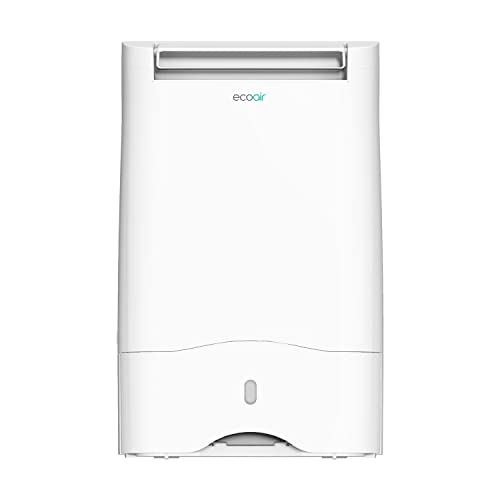
EcoAir DD3 Slimline
10L/day
·
36 dB
|
Desiccants | — | — | — |
£233.99
Price accurate as of 29/11/2026 06:23 GMT
|
Check price on Amazon |
| Hygrometers | — | — | — |
£16.99
Price accurate as of 29/11/2026 06:23 GMT
|
Check price on Amazon |

Product prices and availability are accurate as of the date/time indicated and are subject to change. Any price and availability information displayed on Amazon.co.uk at the time of purchase will apply to the purchase of this product.
Frequently Asked Questions
What humidity should I keep my garage at to stop rust?
Meaco's Chris Michael recommends setting a garage dehumidifier to 50% RH, whatever type of dehumidifier it is. That keeps condensation off metal while avoiding over-drying leather and wood veneer, which Meaco warns can crack. On the EcoAir DD1 Simple, the Medium setting dries the air to approximately 50% RH.
Should I leave the garage door open to air it out?
Meaco says increased ventilation is not really a solution for a garage: you can't leave it open securely, and you have no way of knowing whether the outside air coming in is damper than the air already inside. Its advice is to seal the garage as well as you can and let a dehumidifier keep the air dry.
Will a compressor dehumidifier work in a cold garage?
Compressor models rely on a cold coil and lose effectiveness in cold spaces; Meaco says desiccant models offer better extraction below 10°C, and the compressor models in our dataset list a 5°C minimum operating temperature. The EcoAir desiccant models listed here operate from 1°C. If your garage is insulated and stays mild, a compressor can work.
How much does it cost to run a dehumidifier in a garage?
The EcoAir DD1 Simple MK3 draws 300 W on low and 580 W on high according to EcoAir, which works out at about 7.90p and 15.27p per hour at the Ofgem cap of 26.32p/kWh (1 October to 31 December 2026). With the humidistat set, it stops when the target is reached, so it will not run at full power around the clock in a well-sealed garage.
More UK Damp & Running-Cost Guides
Why Drying Wet Clothes on Radiators Causes Black Mould and Costs More to Heat
Every drop of water in a wash load ends up in your room's air, and draping it on a radiator simply speeds that up while blocking the heat the radiator is meant to circulate. NHBC estimates indoor drying can add 160 to 550 litres of moisture a year to a household, which settles as condensation on cold walls and windows and feeds black mould. Dry on an airer in one closed, ventilated room, ideally with a dehumidifier running (about 4p an hour for a 151 W model at the current Ofgem cap).
Should You Leave Window Trickle Vents Open All Winter in the UK?
Yes. GOV.UK's ventilation guide and the Energy Saving Trust both say to keep trickle vents open and unblocked all year, including winter: you use a little more heating energy, but you get a constant, controlled supply of fresh air that carries moisture out before it condenses. Close them only briefly, for example when outdoor pollution or smoke is high, and reopen them afterwards.
Stopping Green and Black Mould Behind Wardrobes Against External Walls
Mould behind a wardrobe is almost always condensation: the outside wall is cold, the furniture stops warm air reaching it, and moist bedroom air condenses in the still gap. Move the wardrobe to an internal wall if you can; if not, leave a gap of at least 75–100 mm (City of London and Chesterfield council advice), don't overfill it, and keep bedroom humidity in the 40–60% band with ventilation, steady heating and, if needed, a quiet dehumidifier.